Wedding Bounce House: How to Add One Without Wrecking the Reception
I have set up inflatables at backyard weddings, vineyard receptions, park pavilions, and a couple of rented barn venues. The first time a couple asked me about a wedding bounce house, I assumed it was a joke. It wasn't, and it has since become one of the most useful things I suggest to couples with a lot of kids on the guest list. Done well, it keeps children busy, lets parents sit through the toasts, and gives the photographer some of the best candid shots of the day. Done badly, it becomes a noisy, muddy, liability-shaped problem next to your cake table.
Here is what I have learned about getting it right.
Decide Whether You Actually Need One
Not every wedding needs a bounce house. My rule of thumb is that it earns its place when you have eight or more children between ages three and twelve. Below that number, a craft table and some lawn games usually do the job for less money and less hassle.
It also depends on timing. A ceremony at 2:00 p.m. followed by a long cocktail hour and dinner stretches a child's patience to the breaking point. If the reception runs past four hours, or if guests travel with families, the inflatable pays for itself in quiet. For a short evening reception with mostly adults, skip it.
Talk to your parents and siblings before you decide. They know which cousins are coming and how old they are. I have seen couples book a unit for a crowd of toddlers and teenagers, and neither group used it.
Pick a Unit That Fits the Occasion
Brightly colored castles with cartoon characters look wrong in wedding photos. Most rental companies now offer white, ivory, or soft pastel units, and some do a white-and-gold combo with a matching entry. If you can, ask for photos of the actual unit, not a catalog image. Colors vary, and a faded unit looks worse in a wedding than a bold one.
Size matters more than style. A standard 13 by 13 foot bouncer holds about four to six small children at a time. A larger 15 by 15 foot unit handles eight or so. Do not size it by total guest count. Size it by how many kids will be bouncing at once, which is usually a third of the children at any moment.

Avoid water slides unless the wedding is outdoors in midsummer and families have been told to pack swimwear. Wet children in formal clothes is a mistake I have watched play out exactly once, and the dry cleaning bill was memorable.
Check the Venue Before You Book Anything
This is where most wedding bounce house plans fall apart. Venues often have rules that nobody mentions until the week of the event. Ask these questions in writing:
- Does the venue allow inflatables at all?
- Is there a flat, grassy area of at least 20 by 20 feet, clear of branches and wires?
- Is there a power outlet within 50 feet, or will you need a generator?
- Are stakes allowed in the ground, or will sandbags be required?
- Does the venue require proof of insurance from the rental company?
Many venues have sprinkler systems that run on a timer. I have arrived at a setup to find a soaked lawn and a unit that could not go down. Ask when sprinklers run and have them turned off for the day.
Indoor use is possible in a large hall with high ceilings, but it requires at least 15 feet of clearance and a floor that can take the weight of the blower and anchoring. Most banquet halls are not set up for it.
Place It Away From the Action
Bounce houses are loud. The blower hums constantly, and the children inside are not quiet. Put the unit at least 50 feet from the ceremony space and as far from the speakers as the layout allows. I usually aim for a spot that parents can see from their tables but that is out of earshot of the vows and speeches.
Keep it away from the food and drink area too. Children who bounce for twenty minutes and then run to the dessert table are a recipe for spills. A buffer of lawn games or a shaded seating area between the two works well.
Think about the photos. If your photographer is shooting the sunset portraits, the bright inflatable can end up in the background. Mention it to them so they can frame around it.
Plan for Supervision
This is the part couples skip and regret. A rental company will set up the unit and explain the rules, but they will not stay to watch the children. Someone has to.
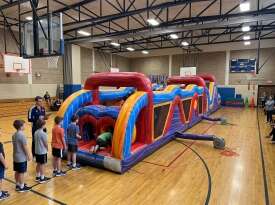
I tell couples to assign one adult per shift, not a vague "the parents will watch." Pick a cousin, an aunt, or a hired teenager, and give them a one-hour block so no one misses the whole reception. Their job is simple: enforce the capacity limit, keep shoes and sharp items out, separate big kids from small kids, and shut the unit down if the weather turns.
Hiring a paid attendant costs roughly $15 to $25 an hour in most areas, and I think it is money well spent. A guest on duty is a guest who is not at the party.
Handle Dress Codes and Safety Rules
Wedding guests are dressed up, and children are no exception. Set a shoes-off rule at the entrance and have a basket or a shaded mat for shoes. Ask parents to remove hair clips, jewelry, and anything in pockets.
Girls in long dresses and boys in dress shoes do not mix well with inflatables. I suggest the couple let parents know ahead of time, in the invitation or on the wedding website, that a bounce house will be available and that a change of clothes is a good idea. Some families bring play clothes and change after the ceremony, which solves the problem completely.
Wind is the other big risk. Most manufacturers say to shut down a unit when sustained winds hit 15 to 20 miles per hour. If the forecast looks bad, talk to the rental company about a backup plan. A good provider will tell you honestly when conditions are unsafe, and you should listen.
Book Early and Read the Contract
Peak wedding season, roughly June through September, fills up fast. I recommend booking at least six to eight weeks ahead, and earlier for Saturdays. If you are searching for bounce house rentals near me, look for a company that offers all-day rental windows, professional setup, and a clear cancellation policy. A four-hour rental is rarely enough for a wedding, because setup happens before the ceremony and takedown after the last guest leaves.
Read the contract for the details that matter. Confirm the delivery window, who handles setup, what the weather policy is, and whether insurance is included. Ask for a certificate of insurance to give your venue. Prices vary by region and unit type, but expect to pay somewhere between $150 and $400 for a standard unit for the day. Premium white units cost more.
Set It Up Last and Take It Down First
Timing on the day is the final piece. I like to have the unit delivered and set up two hours before guests arrive but left deflated until the ceremony ends. A giant white inflatable sitting behind the aisle during the vows is not the look most couples want.
Ask the rental crew to inflate it during the cocktail hour, when guests are moving around and the noise will not interrupt anything. Then plan for it to come down about thirty minutes before the formal dances or the cake cutting, if you want the focus on the couple. Children can be redirected to the dance floor, which they generally enjoy.
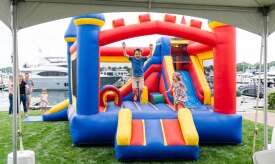
A wedding bounce house is not for everyone, but for the right guest list it solves a real problem. Check the venue, assign supervision, plan the placement, and book early. The details are not complicated, but they are easy to forget when you are juggling a hundred other decisions. Handle them in advance, and you will spend the reception watching the party instead of managing it.